




01
Look and Confirm
An exam — and digital X-rays when needed — confirms the cavity is a good candidate and rules out anything deeper going on.
The no-drill way to stop an early cavity in its tracks.
Silver diamine fluoride (SDF) is a liquid treatment that's brushed onto a cavity to stop the decay in place — no drilling and no numbing needed. Dr. Jason Brock, a board-certified pediatric dentist, uses SDF in Clear Lake to arrest early cavities and buy growing kids time.
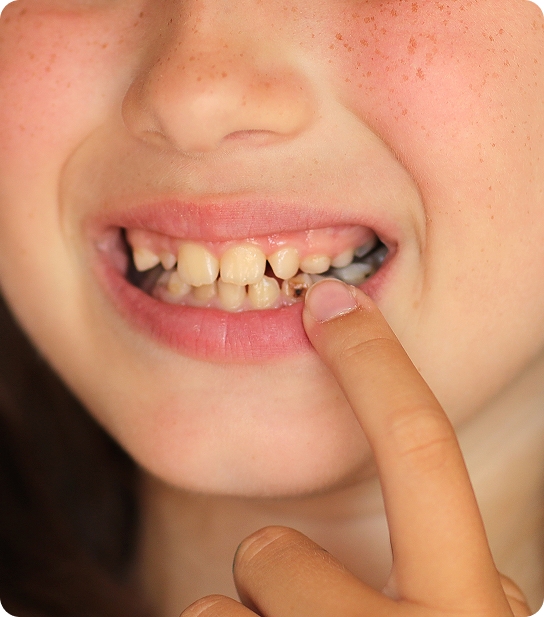
SDF is a clear liquid with two active jobs. The silver goes after the bacteria driving the decay, and the fluoride strengthens what's left of the tooth. Painted onto a cavity, it can stop the decay right where it is — what dentists call an arrested cavity — without removing any tooth structure at all.
The application takes about a minute per tooth and asks almost nothing of the child, which is exactly why it's such a useful tool in pediatric dentistry. There's one trade-off, and we'll be straight with you about it: SDF darkens the decayed spot it treats. When that trade is worth making — and when it isn't — is what the rest of this page covers.

SDF at our office is applied by Dr. Jason Brock, DDS — Diplomate, American Board of Pediatric Dentistry — after an exam confirms it's the right tool for the tooth. You'll hear the honest case for and against before anything is applied, with you kept informed the whole time.
Four situations bring SDF into the conversation at our office. Early, small cavities we want to stop before they grow. Very young children — a toddler facing treatment that would otherwise mean IV sedation, where SDF can hold the line until they're older and treatment gets easier. Teeth that are very sensitive, where SDF calms things down. And children with special healthcare needs, for whom a one-minute painted-on treatment is simply a better-matched experience than a longer procedure.
It isn't the answer to everything. SDF stops decay, but it doesn't rebuild the tooth or repair deep cavities, teeth that already hurt, and decay near the nerve that needs a filling, a crown, or other treatment. The exam and, when needed, digital X-rays tell us which side of that line your child's tooth is on.
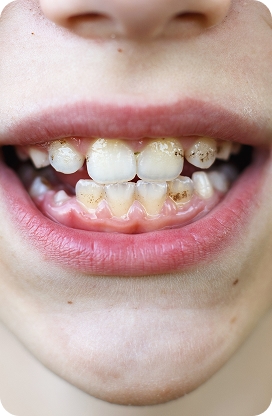



SDF turns the decayed part of the tooth dark, usually black. Healthy enamel doesn't stain — only the decay does — so the dark spot is actually the evidence that the treatment is doing its job. On back baby teeth, that spot often goes completely unnoticed in daily life. On front teeth, it's a real aesthetic conversation, and we'll have it with you honestly before anything is applied — you'll know exactly what to expect before we ever open the bottle.
Here's the detail most parents don't hear elsewhere: when we use SDF on sensitive but healthy teeth, there's no decay to stain — so there's no dark spot at all. The stain follows the disease, not the treatment.
SDF has been used on children around the world for decades, the applied amount is tiny — a drop goes a long way — and the American Academy of Pediatric Dentistry recognizes it as an option for arresting cavities in kids. The honest drawback list is short: the dark stain on treated decay, a momentary bitter taste, and the chance of a temporary mark where it touches gums or skin. We don't use it for children with a silver allergy or certain mouth sores, which is part of what the exam checks. Like every treatment here, it's recommended child by child, not by default.
No. SDF is made of silver, fluoride, ammonia, and water — there is no mercury in it. The mix-up usually comes from an entirely different material: old-fashioned metal fillings, which some people call "silver fillings." SDF shares the word "silver" with them and nothing else. If chemistry questions are your love language, bring them to the visit — Dr. Brock genuinely enjoys answering them.
They solve different problems — one stops decay, the other rebuilds the tooth.
| Silver Diamine Fluoride | A Filling |
|---|---|
| Stops early decay in place — no drilling, no numbing | Removes the decay and rebuilds the tooth |
| Takes about a minute per tooth | Tooth-colored and shade-matched — no dark spot |
| Darkens the treated spot | Needs numbing and a cooperative visit |
| Doesn't restore the tooth's shape or structure | The standard fix once a cavity is past "early" |
| Often the bridge for very young or anxious kids — and sometimes the whole answer for a baby tooth near its natural end |
Sometimes SDF is step one and a filling is step two, once your child is older or the timing is better. Dr. Brock will show you the tooth and lay out the honest sequence.
Sometimes SDF is step one and a filling is step two, once your child is older or the timing is better. Dr. Brock will show you the tooth and lay out the honest sequence.
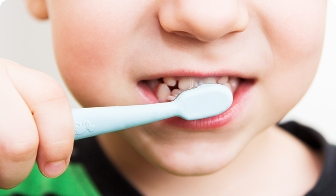
For kids whose decay keeps coming back, Povi-One helps "reset" the mouth — a six-month course applied once a month at home, and we usually pair it with dental probiotics.
Learn About Povi-One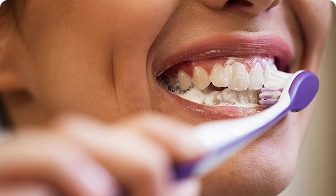
A remineralizing treatment we use on noticeable white-spot damage on front teeth — including the marks that can show up after braces come off.
Learn About Curodont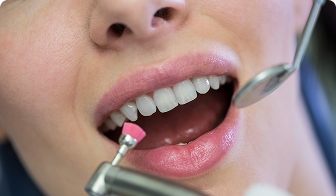
A nano-hydroxyapatite varnish applied after cleanings — a remineralizing option for families who prefer a fluoride-free choice.
Learn About FyggNone of these are one-size-fits-all. They're tools, and the exam decides which one — if any — fits your child.

If your child is very young, very anxious, or has special healthcare needs — and you've been told treatment means sedation — ask about SDF first. It isn't right for every tooth, but when it fits, it can sometimes change the whole plan. One honest look is all it takes to find out.


01
Look and Confirm
An exam — and digital X-rays when needed — confirms the cavity is a good candidate and rules out anything deeper going on.
02
Dry and Isolate
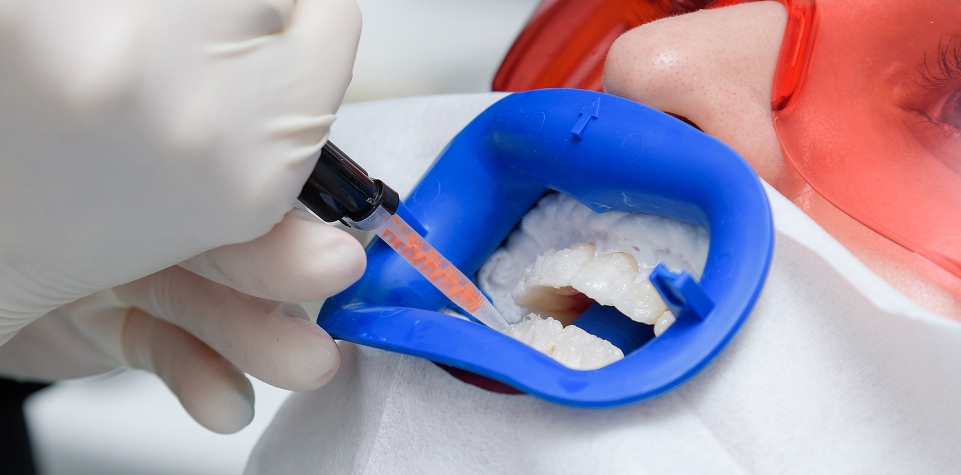
The tooth is dried and kept isolated for a moment; keeping the liquid exactly where it belongs is most of the skill.
03
Paint It On
A tiny brush, a drop of SDF, a minute or two per tooth. A briefly bitter taste is the worst most kids report.
04
Watch and Recheck
We track the treated spot at regular checkups and reapply when it's indicated — arrested decay gets monitored, never forgotten.


This is the easiest aftercare on the menu. We'll give you simple instructions at the visit — usually a short wait before eating or drinking — and then life goes on as normal: regular brushing, regular flossing, regular checkups. Expect the treated spot to darken over the days that follow; that's the treatment working, not a problem developing. There's no soreness to manage and nothing your child has to avoid.
Call us if you notice lasting gum irritation near the treated tooth, or if the tooth starts to hurt — pain is a sign the decay may be deeper than SDF can handle, and we'd want to see it.
It's one of the most economical treatments we offer, and the honest variables are few: how many teeth need it, and whether it's part of a bigger plan for your child's mouth. The exam turns that into a real estimate, and you'll have it before anything is applied.
We're in-network with many major PPO plans and verify your benefits before your visit, and families without insurance can look at our membership plan or our insurance and payment page for the full picture.

Pediatric Dentist • 4.9 • 211 reviews

2 days ago
Dr Brock and staff are just fabulous, honest and efficient!
2 weeks ago
Both my boys have been going to Dr. Brock for many years. He is very thorough and his staff is amazing. Definitely recommend Big Picture Dentistry.
2 weeks ago
I've been going here for years, they are incredibly friendly and informative.
Our office sits at 17150 El Camino Real, Houston, TX 77058 — on the El Camino Real corridor in the Clear Lake area, near NASA Parkway and Bay Area Boulevard, with easy ground-floor access. We schedule Monday through Friday until 4:30pm, early enough to handle before the school bell.
Minimally invasive first is how Dr. Jason Brock practices — reach for the gentlest option that genuinely works, and save the bigger tools for when they're truly needed.

The stain doesn't wash off or fade on its own; it stays as long as the treated spot does. On a baby tooth, that means it leaves when the tooth does. And it isn't necessarily forever even before then — if the tooth later gets a filling or a crown, the restoration covers the darkened area completely. We'll tell you up front how visible it's likely to be for your child's specific tooth.