


01
Risk Check
The exam and your child's history decide whether varnish makes sense today and how often it should repeat — the recommendation comes with its reasoning attached.
A one-minute boost that makes enamel harder to hurt.
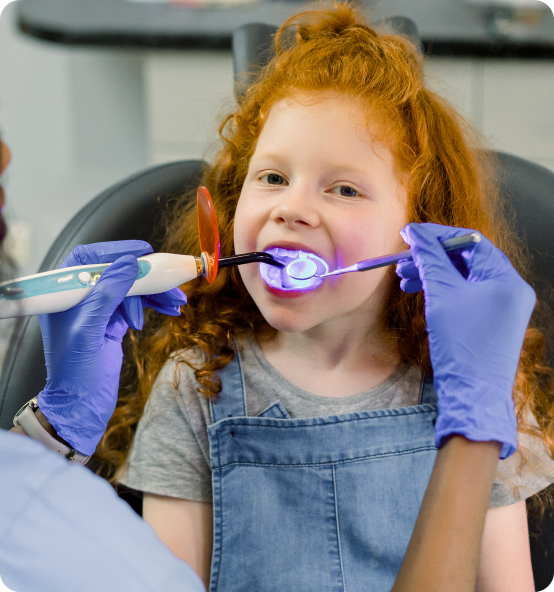
A fluoride treatment is a concentrated varnish painted onto your child's teeth — usually at the end of a cleaning — to strengthen enamel and make cavities harder to start. Dr. Jason Brock, a board-certified pediatric dentist, recommends fluoride for kids in Clear Lake based on each child's cavity risk, or a fluoride-free alternative depending on you and your child's needs.
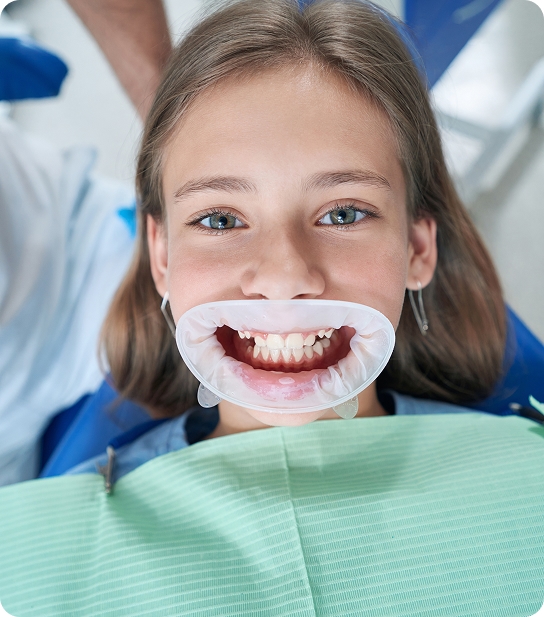
Enamel is under low-grade attack all day — acids from food and bacteria pull minerals out of it, and saliva works to put them back. Fluoride tips that contest in the tooth's favor. It helps enamel repair its earliest weak spots (a process called remineralization) and makes the repaired surface tougher for acids to break down next time.
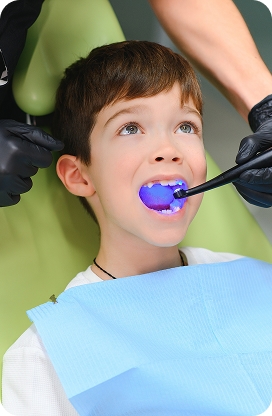
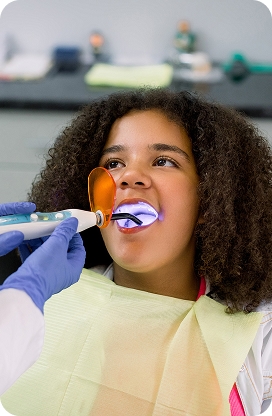
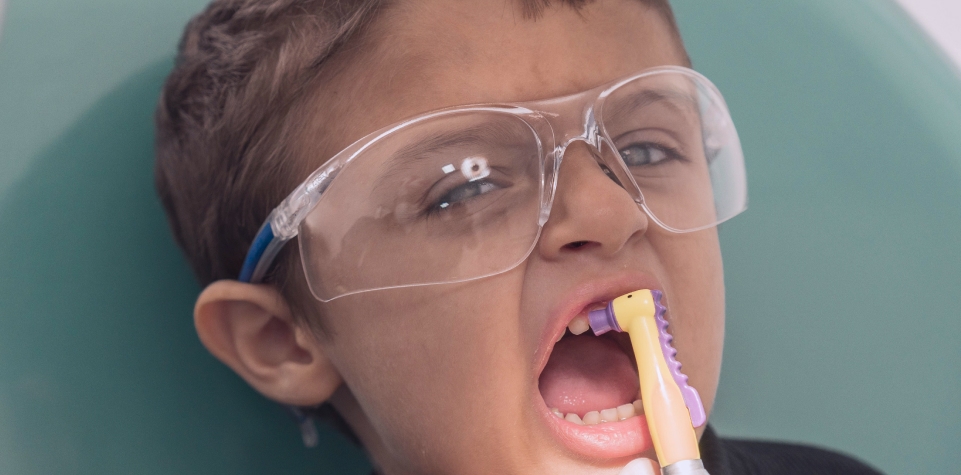
The version we apply in the office is a varnish — far more concentrated than anything in a toothpaste tube, painted directly onto the teeth where it can do focused work. It goes on in about a minute, sets on contact, and your child heads back to their day. Kids get the most from it because their enamel is still maturing and their cavity-prone years are exactly now.

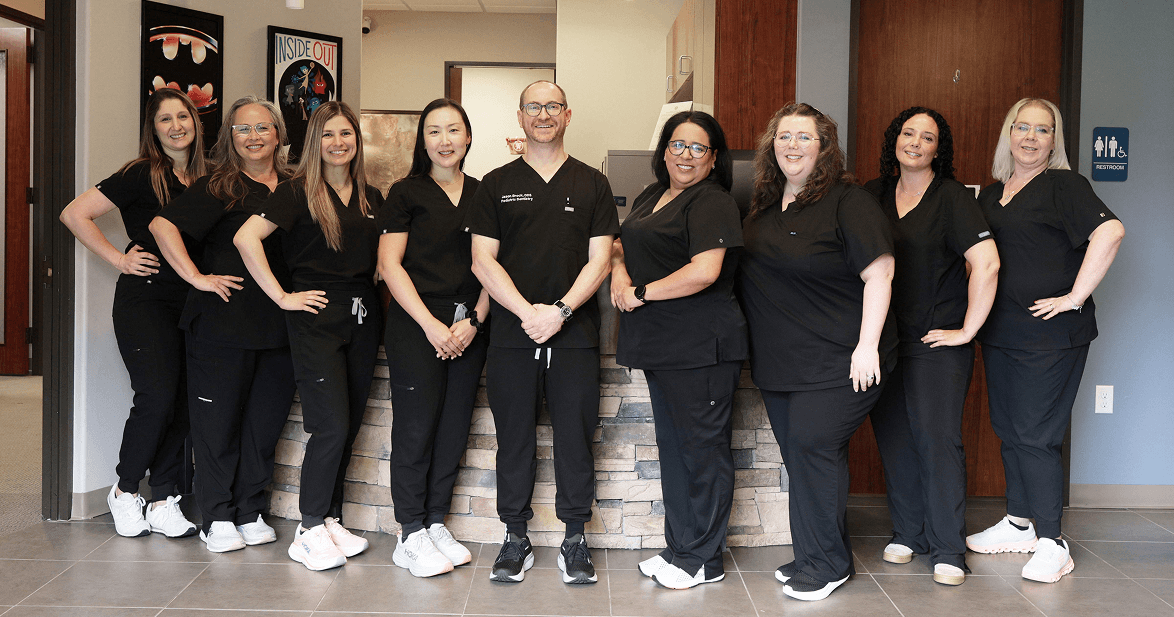
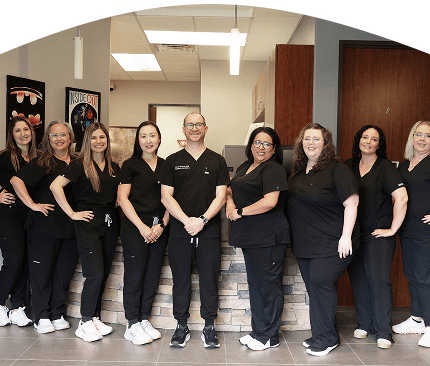
Fluoride recommendations at our office come from Dr. Jason Brock, DDS — Diplomate, American Board of Pediatric Dentistry — based on your child's exam and cavity risk, and the varnish is applied by our hygiene team as part of the visit. Questions get answered before anything is painted on.
Fluoride varnish is especially helpful for kids with real cavity risk: a history of decay, deep grooves in the back teeth, braces making brushing harder, constant snacking or sugary sips, or enamel that's simply proven itself vulnerable. For those kids, the periodic concentrated boost is often the difference between "watch this spot" and "fill this tooth."
Lower-risk kids are a different conversation, and we have it honestly. Some need varnish less often; the exam and your child's history decide, not a default checkbox. The rare reasons to skip fluoride entirely are part of what the exam covers — and if skipping is your family's preference for other reasons, that's covered a little further down this page.

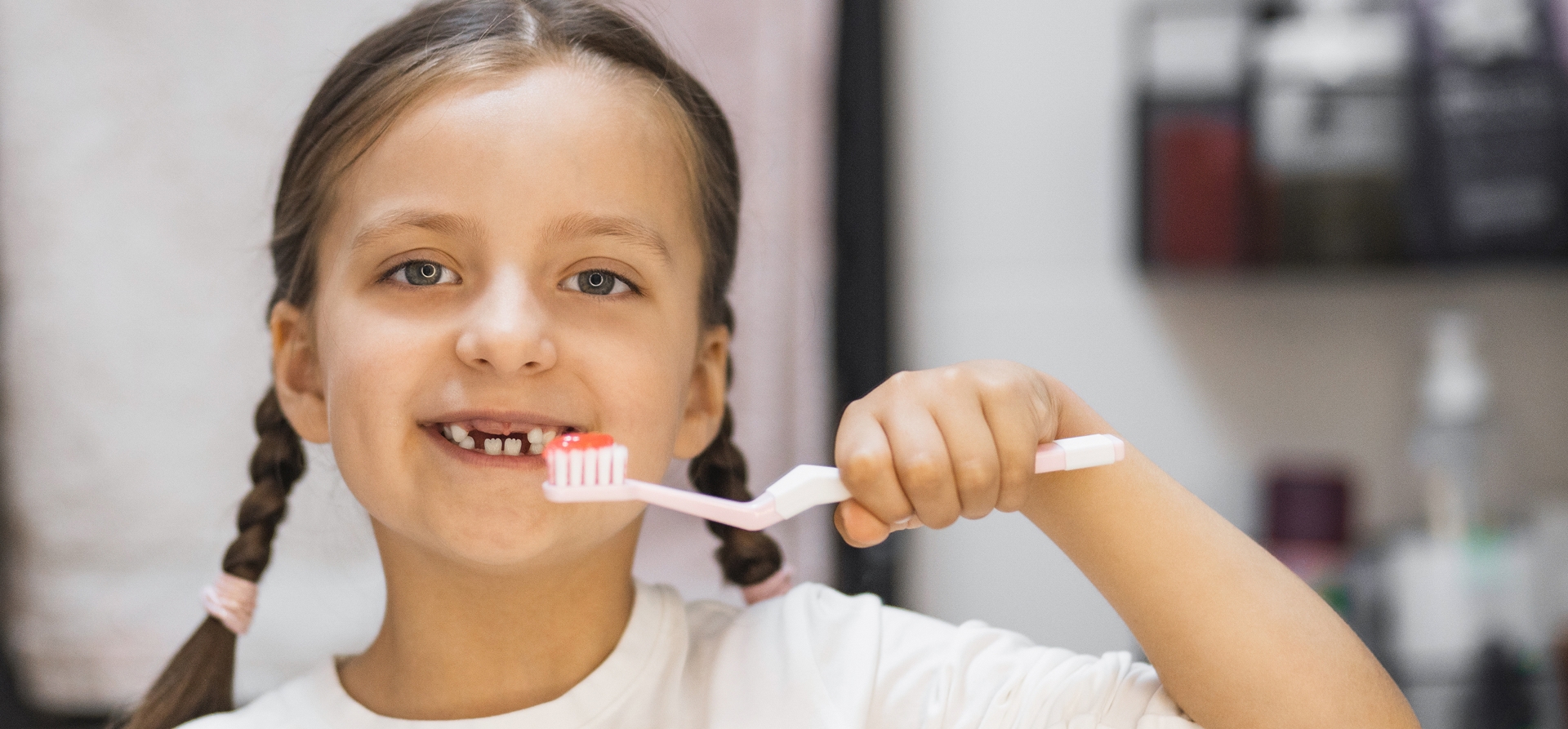
For some kids, honestly, it nearly is — daily brushing with a fluoride toothpaste is the backbone of prevention, and nothing we do in the office replaces it. But toothpaste and varnish are doing different jobs. Toothpaste delivers a small maintenance dose twice a day for two minutes; varnish delivers a concentrated, professionally placed dose that keeps working on the enamel long after the visit.
Think of it as the difference between watering the lawn and a deep soak at the roots. Lower-risk kids may do fine on the daily routine alone. Higher-risk kids usually need both — and the exam is how we tell you which camp your child is in.
Here's the honest, non-defensive answer: with fluoride, the whole question is dose — and professional varnish is built around exactly that. The amount we apply is small, matched to your child's age and size, and painted on so it sets in seconds, which means very little goes anywhere except onto the enamel. Fluoride varnish is recommended for children — including toddlers and babies with their first teeth — by the American Academy of Pediatric Dentistry and the American Dental Association, and it's been used on very young children for decades. We'll walk you through the amounts, the evidence, and your child's specific situation anytime you ask. Questions about fluoride are treated as good parenting here, not as a challenge.
Then let's talk about it like adults, because you have real options here. First, we'll share the evidence honestly — for most kids, fluoride varnish is the best-proven tool we have. But if your family still prefers a fluoride-free path, we offer FYGG, a nano-hydroxyapatite varnish, as a fluoride-free remineralizing option after cleanings, and we'll lean harder on the other layers — sealants, diet, brushing technique, and a closer watch at checkups. Your child's prevention plan should be one you feel confident in, because we are on the same team.
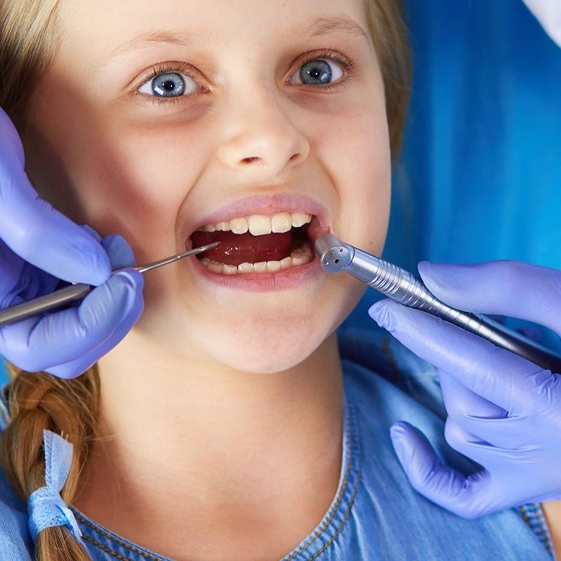
That's a fine place to stand. Bring your questions — the pointed ones too — and we'll lay out the evidence, your child's actual risk, and every option on the table, fluoride-free ones included. Then you decide, with all the cards face up.


01
Risk Check
The exam and your child's history decide whether varnish makes sense today and how often it should repeat — the recommendation comes with its reasoning attached.
02
Clean Surface
Varnish usually follows the cleaning, so it's going onto freshly cleared enamel where it can work best.
03
Paint It On
A small brush, a thin layer over the teeth, well under a minute. It sets on contact with saliva, and the flavor is mild enough that most kids just shrug.
04
Simple Instructions
You leave with the varnish's easy dos and don'ts and a repeat interval matched to your child's risk.

This is aftercare on easy mode. The teeth may feel slightly coated for a few hours — that's the varnish doing its job, not residue gone wrong. We'll give you the exact instructions for the product we use at the visit; typically that means soft foods for a bit and holding off on brushing until later that day, so the fluoride gets its full working shift on the enamel.
By the next morning, everything is back to normal. If your child chews something sticky right away and you suspect the coating came off early, don't panic — just mention it at the next visit.
Fluoride varnish is one of the least expensive things we do, and it's usually part of a preventive visit rather than a standalone appointment. Many dental plans cover fluoride for children, though some limit how often — we're in-network with many major PPO plans and verify your benefits before your visit, so you'll know your plan's rules up front.
No dental insurance? Our membership plan and insurance and payment page lay out the options.

Pediatric Dentist • 4.9 • 211 reviews

2 days ago
Dr Brock and staff are just fabulous, honest and efficient!
2 weeks ago
Both my boys have been going to Dr. Brock for many years. He is very thorough and his staff is amazing. Definitely recommend Big Picture Dentistry.
2 weeks ago
I've been going here for years, they are incredibly friendly and informative.
Our office sits at 17150 El Camino Real, Houston, TX 77058 — on the El Camino Real corridor in the Clear Lake area, near NASA Parkway and Bay Area Boulevard, with easy ground-floor access. We schedule Monday through Friday until 4:30pm.
Dr. Jason Brock recommends prevention the way he practices everything else — matched to the child in the chair, explained in plain English, and decided together with you.
For most kids, every three to six months — often lining up with regular cleanings — but the honest answer is that your child's cavity risk sets the schedule. Higher-risk kids benefit from the shorter end of that range; lower-risk kids may need varnish less often. We'll tell you the interval we recommend and exactly why.