



01
Talk First
Before anything is scheduled, we learn about your child from you: needs, triggers, communication style, medications and health history, and the time of day they're at their best.
Care that adapts to your child — not the other way around.
Special needs pediatric dentistry is dental care adapted to each child — extra time, quieter appointment times, desensitization visits, and supports built around how your child experiences the world. Dr. Jason Brock, a board-certified pediatric dentist, cares for children with special healthcare needs in Clear Lake, from routine cleanings to complex treatment.

The dentistry itself doesn't change — cleanings, exams, fillings, and everything else your child's teeth need. What changes is the delivery. We care for autistic children, kids with sensory processing differences, children with developmental or physical disabilities, and medically complex kids — and for each of them, the visit is shaped around the child instead of the child being squeezed into a standard slot.
This isn't a sideline for pediatric dentistry; it's part of the specialty's own definition, which explicitly includes children with special health care needs. Every child here gets an individualized care plan that carries from visit to visit, so the things that worked last time are already in place next time.

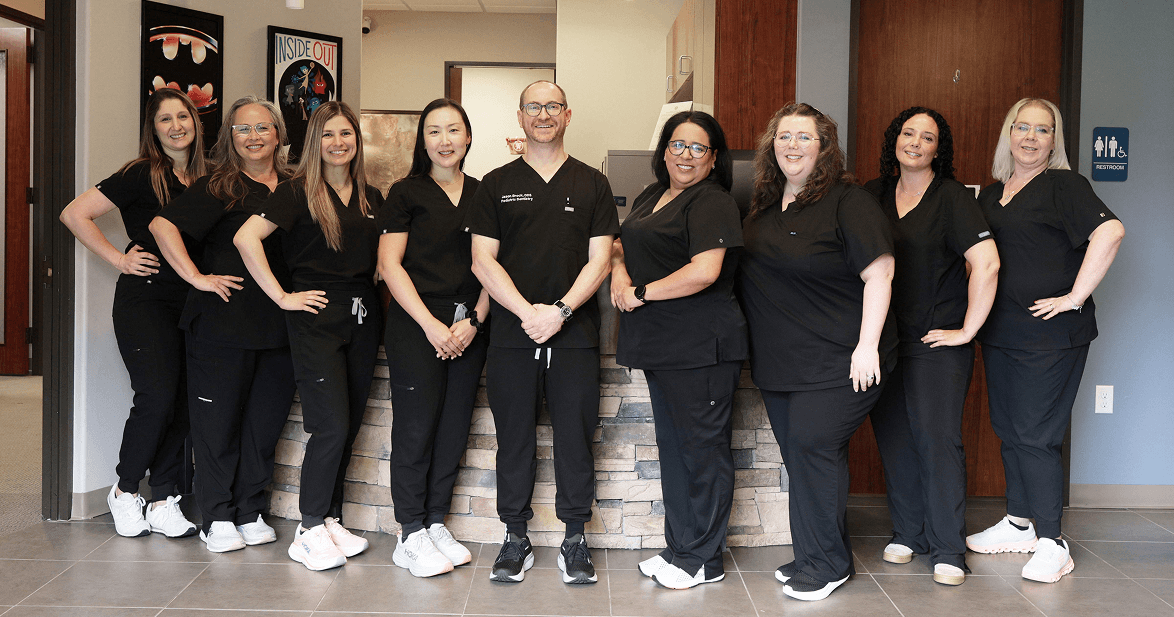
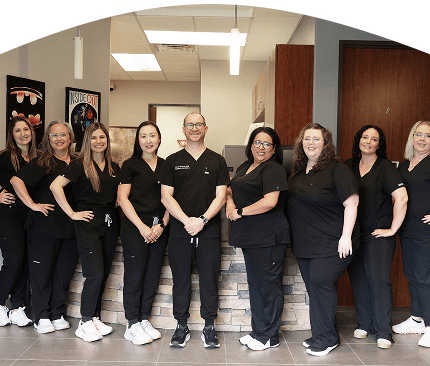
Teen visits are led by Dr. Jason Brock, DDS, Diplomate, American Board of Pediatric Dentistry, who talks to teens directly: their questions, their answers, their buy-in. Dr. Brock completed his residency in pediatric dentistry at UT Houston School of Dentistry and is listed as a dental provider with Texas Children's Hospital.
Before the first appointment, we want the briefing only you can give: what works, what doesn't, what overwhelms, how your child communicates, and what time of day brings out their best. We schedule and plan from that — quieter slot, longer booking, the right on-ramp — and the notes stay in your child's individualized care plan so every visit starts ahead of the last one.
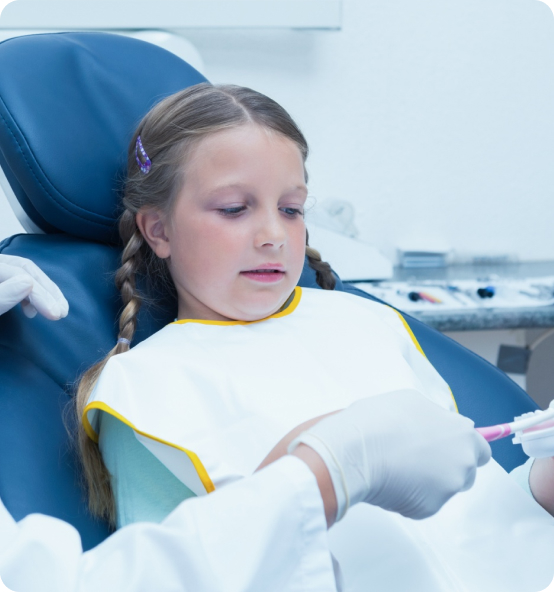
During the visit, the pace belongs to your child. We use the gradual, pressure-free approach dentists call behavior guidance, you stay informed throughout, and goals get sized honestly: some first visits are a hello, a look around, and a ride in the chair — and that's a win we'll gladly bank.



"Sensory-friendly" gets thrown around loosely, so here's what it specifically means at our office — the accommodations we reliably provide, by name:

Your child's appointment is booked longer, so nobody is racing a clock.

Certain times of day are calmer here, and we'll schedule your child into them.

Gradual, pressure-free visits that build familiarity step by step, at your child's pace.

If taste or texture is the battleground, bring the one that works. We'll use it.

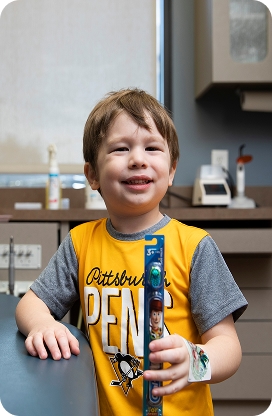
Your child can take a picture with Dr. Brock to keep at home, so daily brushing has a familiar face attached to it. Small thing; for some kids, it changes the whole routine.
If your child needs something that isn't on this list, ask. The list is what we promise every family — it's not the ceiling of what we'll try.
Yes — and for many families it's the best possible start. We offer complimentary pre-visit tours: a scheduled, no-treatment hello where your child can meet Dr. Brock, see the rooms, and leave without anything being asked of them. We schedule tours deliberately, on set dates and times, so the office is calm when you come. From there, desensitization appointments can build the next steps as gradually as your child needs — familiarity first, dentistry when they're ready.
Yes — the full range exists here, and we're equally comfortable not using it. Many children do beautifully with accommodations and gradual visits alone, and that's always the first path. When treatment needs outpace what adaptation can manage, sedation becomes part of the conversation: nitrous oxide, oral sedation, and IV sedation — with IV overseen by a sedation specialist working with experienced local anesthesiologists, considered from around age two based on each child's weight and health evaluation. It's a decision we make together, evaluation first, never a default.
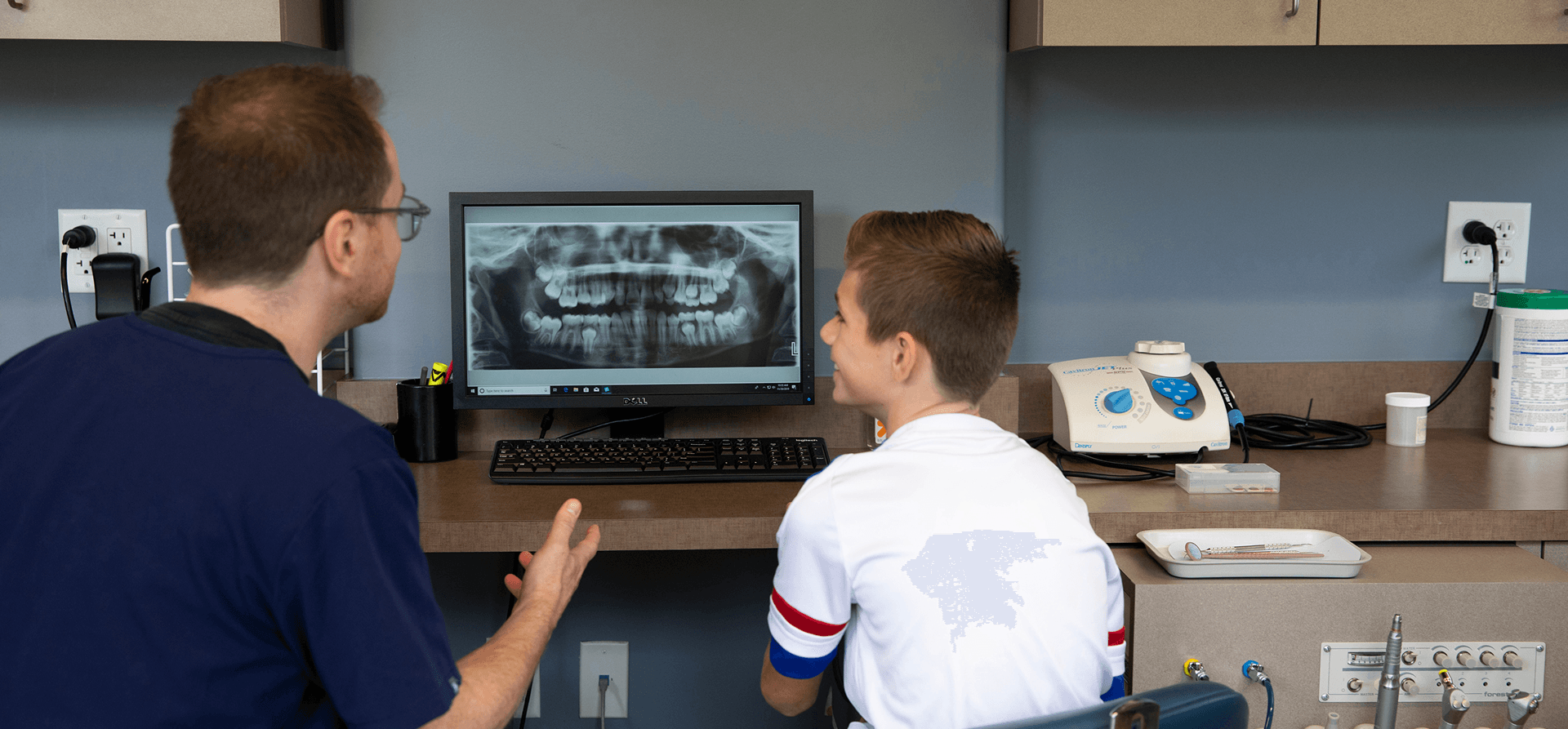
The generic intake experience. Call us — or put it in the appointment-request form — and tell us what works for your child, what doesn't, and what's gone wrong elsewhere. We'll plan the visit around your answers, or start with a tour instead. Either way, the first move is a conversation, not a chair.

Accommodations, gradual desensitization, and visits built around your child — most care happens right here.
Learn About First Visit
Minimally invasive options like silver diamine fluoride can stop early decay in about a minute, no drilling — sometimes that changes the whole plan.
Learn About SDF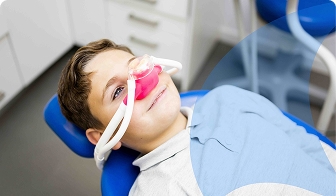
For bigger treatment needs, sedation options are real and honestly discussed — a tool, never a shortcut.
Learn About CrownsMost children move between these paths over time. The plan flexes; the goal — a healthy mouth and a child who tolerates care — doesn't.
01
Talk First
Before anything is scheduled, we learn about your child from you: needs, triggers, communication style, medications and health history, and the time of day they're at their best.
02
Choose the On-Ramp
A complimentary tour, a desensitization visit, or straight to a gentle first appointment — your call, guided by what you know.
03
The Visit, Adapted
Extra time booked, a quieter slot, your child's own toothpaste if that's the winning move, and the pace set by your child.
04
Build the Plan
We record what worked, bank the progress, and map the next step — so each visit starts where the last one succeeded.
Daily brushing is usually the harder battle, and we coach it honestly — strategies matched to your child, the same toothpaste continuity we use in the office, and goals sized to reality rather than to a pamphlet. This is also where that photo with Dr. Brock earns its keep for some families: a familiar face by the sink, anchoring the routine.
And when things change between visits — new sensitivities, new medications, a school-year transition that's reshuffled everything — call us. The care plan is a living document, and updating it is part of the service, not an imposition.
The visit itself works like any pediatric dental visit: the exam determines what your child needs, and you'll have an honest estimate before any treatment starts. The variables are the treatment itself and whether sedation becomes part of the plan — never surprises.
We're in-network with many major PPO plans and verify your benefits before your visit. Families without insurance can look at our membership plan or the full picture on our insurance and payment page.


Pediatric Dentist • 4.9 • 211 reviews

2 days ago
Dr Brock and staff are just fabulous, honest and efficient!
2 weeks ago
Both my boys have been going to Dr. Brock for many years. He is very thorough and his staff is amazing. Definitely recommend Big Picture Dentistry.
2 weeks ago
I've been going here for years, they are incredibly friendly and informative.
Our office sits at 17150 El Camino Real, Houston, TX 77058 — on the El Camino Real corridor in the Clear Lake area, near NASA Parkway and Bay Area Boulevard. There are no stairs and no elevator between the parking lot and our door, which matters with a wheelchair, a walker, or a child who moves fast. We schedule Monday through Friday until 4:30pm.
Dr. Jason Brock looks at the big picture of every child's well-being — and for children with special healthcare needs, that picture starts with meeting your child exactly where they are.
Yes — warmly and regularly. Every accommodation on this page applies, and more importantly, every autistic child is an individual: what works is whatever works for your child, which is why the pre-visit conversation and your briefing come first. Tours and desensitization visits are popular starting points, and never required.